Social Sleuth Diaries 2
The '5 Episodes Down' Reflection: Part 2
Okay, things have gotten more serious. With 11 episodes under my belt, I am feeling more like a ‘podcaster’ than I did a few months ago.
Maybe you’ve noticed, maybe you haven’t – but I’ve been brushing up on my audio skills, bringing what I hope is better quality listening with each new episode. AND I noticed as I laid out this post, that 4/5 of this recaps’ episodes were actually recorded in-person! I love being able to remotely record with anyone worldwide, but there is something special about actually sitting in the same room as your guest, reconnecting with old friends and past professors – sharing laughs and even some Social Sleuth stickers as a humble thank you.
Chatting with the guests I have selected based on their expertise and experience in particular areas of the web, and those I think are in a position to theorize some of the changes and challenges our digital world faces, has led me to some answers all while generating new questions along the way. So just as I did with my first 5 episodes, I am back with a recap – what I’ve been talking about, with whom, and of course my reflections.
This recap is both for you and me, so we can dive deeper and broaden our sleuthing approach going forward. Let’s go!
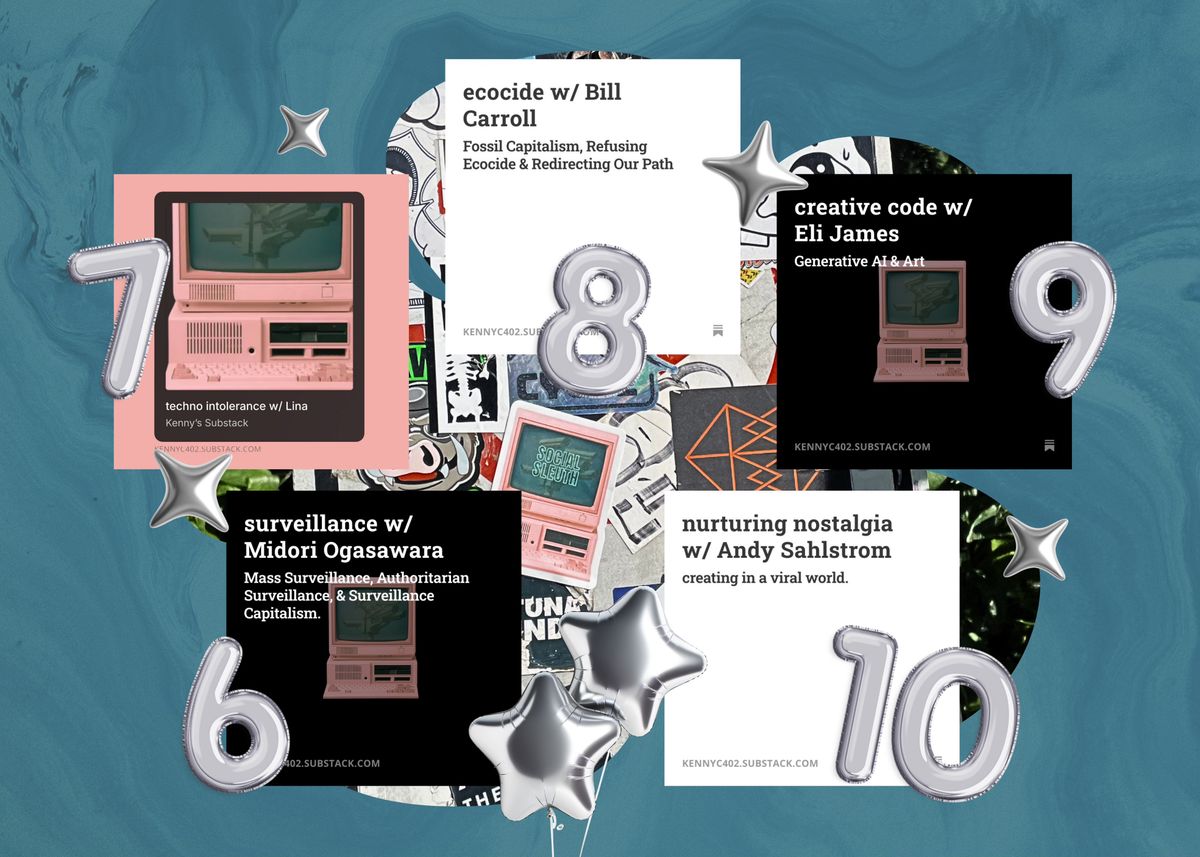
Episode 6 Midori Ogasawara | Surveillance, “there is no national border in the cyberspace.”
The perfect episode and guest to come back to after a little summer break – Dr. Midori Ogasawara. Essential to the conception of Social Sleuth is surveillance studies, and if I’m being honest, Midori herself.
Kickstarting my introduction to surveillance studies, Midori laid the foundation for critical inquiry and fostered the space to question authority in her classroom. It was an honor to interview her, especially given her background as a journalist, and of course her scholarly undertakings – but more than anything, Dr. Midori Ogasawara is an amazing person, who among many professors, coaches, instructors and mentors I’ve had, stands out.
I know that what I understand about surveillance is just the tip of the iceberg, and I’m amazed that with the knowledge Midori has across many schools of thought, she still remains hopeful for a better future. I do want to relink Midori’s article “In the Heart of Liberal Democracy” because it’s important we keep this front of mind. Authoritarian surveillance is not some far away issue, it’s not reserved for ‘other’ countries, it’s very much here, we are living it.
And I want to echo Midori’s sentiment, being that when speaking to surveillance there cannot be an us vs them binary between democracy and authoritarianism – not in a bid to equalize such political ‘systems’, but to offer some transparency as to how surveillance practices inch their way into law, into normal everyday practice – through fear, based in proactiveness, and in the West, pointing the finger at eastern countries that are just a bit more open about the same things we do here.
If there’s anything this episode taught me, it’s that there’s more work to be done, work that includes bringing this sort of transparency to as many people that will listen.
Episode 7 Lina Maria Clevenger | Techno Intolerance, “who is imagining an alternative”
Wow! Lina, OMG. What a chat.
I met Lina in my first few weeks at UVic, eventually finding ourselves in different social circles, and now…. Eeeek SEVEN. Yes 7 years later, I found myself on Instagram swiping through stories, and Lina’s repost caught my eye. I can’t fully remember now, but it was more or less about internet culture, the panopticon we face online, and the reality of the tech world we live in.
The reality of the advocacy post is dull, but the glimmer of hope, that yes! Other people are talking about this, thinking, and feeling all sorts of ways, had me very excited. This sort of dialogue can easily be found in online communities but often, given the nature of the topic, is hard to find with peers or local communities. I think it’s sort of a mashup of complacency and shame that leads us to ignoring the very real issues with social media both due to the practices of the companies orchestrating our experience, and the psychological effects of doomscrolling.
But, if you listened, you’d know that both Lina and I are still users of social media, and that is okay too. What I learned, is that conversations like this, no matter how vulnerable it can feel, are what can make these changes doable. We are in this together and identifying how the internet we used to know and love has changed is the first step. It’s simple, if you feel isolated in your experience, it’s a lot harder to break free.
I still stream my music, and use Instagram, but what did come of this was dropping my Spotify RSS feed for Social Sleuth (was I supposed to have two, no, but we’re learning), I needed to streamline and after our convo – Spotify was the real looser.
Also. I won’t say too much more on Lina’s episode, but please do look into techno-feudalism, since recording I can’t stop thinking about it and seeing real life examples playing out in front of me. CHECK. IT. OUT.
Episode 8 Bill Carroll | Ecocide, “we can actually build a different world.”
Bill. Dr. William K. Carroll. The man. The myth. The legend.
Truly, Bill is one of a kind. An exemplary professor, a dedicated scholar, and someone who cares deeply for our home here on earth.
Firstly, right off the bat, Bill defined sociology, and more so his particular interdisciplinary approach to be deeply rooted in understanding the human condition. Which, I love and am surprised to have not heard before.
Now Bill has been doing this a while, so it is no surprise his academic pursuits cover many topics of interest – from climate justice to capitalism and governance. Don’t get me wrong, these topics are so entangled, it’s nearly impossible to address one without the other, nonetheless, Bill’s academic endeavours are abundant. Much like Midori, Bill stands out as a professor – acting as a mentor to so many all while creating safe and engaging learning environments. It was an absolute honor to interview him.
I need to be forthcoming, I sought to interview Bill on some of his works and pick his brain a bit about the post-secondary transition from analogue to digital to meta. BUT, Bill had a surprise, and that was the launch of his new book “Refusing Ecocide: From Fossil Capitalism to a Livable World”.
Maybe surprising to you, but I am a very slow reader, I like to mull over the pages and really take my time. So I had to put my big brain hat on and get to researching – in four short days I did manage to read a GOOD amount of the book. I hope it translated well in this episode, and sure I had the upper hand of being familiar with Bill and many of the foundational concepts of his book, but this isn’t easy stuff.
Hmm. Perhaps easy is not the right word, as I think with a lot of things, ecocide and the consequent critical approach to capitalism, falls into the bucket of things that are easier if the masses don’t understand. It’s sort of gatekept and the simple becomes complex. Now Bills book does nothing in the way of dumbing down ecocide or the measures that led us here – rather I think everyone should be empowered to engage with this content and to challenge themselves to work through the claims of people like Bill and those of our policy makers.
Lastly, if Bill still has hope, I do too. Let’s just not let hope halt taking action NOW.
Episode 9 Eli James | Creative Code, “keep your human spirit alive”
Eli! This episode was a long time coming.
Ai is such a beast of a topic, as Eli mentioned, and when it mixes into Art and the creative process things can get kind of messy.
I’m not committed to the idea that I understand enough about generative Ai to make any strong claims against it. But antidotally after talking with Eli, I just don’t like it.
Eli’s perspective as an artist was refreshing – not from a place of protection over his own work, but from a point of concern towards art as a practice. With so much being said about Ai I wanted to get in on the conversation, brining a more human approach and something less reactive. And I couldn’t have asked for more from Eli, he came prepared and had really flushed out his thoughts and feelings from various points of view. I am very thankful to Eli for this, and I cannot wait to see what transpires in the world of Ai (for better or for worse).
Update since recording: Google Gemini has launched Nano Banana Pro and “is that Ai’ has been added to my vocabulary. Ugh.
Episode 10 Andy Sahlstrom | Nurturing Nostalgia, “It can be like the devil’s playground sometimes in here.”
Andy Sahlstrom, the man behind Shampooty.
This was exciting, I have spoken to many people who just comment on the content online, few actually in on the action, and more never even making a Facebook account. Yet Andy is behind an accidental viral campaign featuring his collection ‘Kids Toys, Adult Issues’.
After scheduling to record with Andy, I came to find out he is not only the 3D modelling artist behind Shampooty, but has a been telling stories through his various works, creating exhibits, sculptures, and even making instruments??
I am so happy to have interviewed Andy, who seems like quite a chill dude, despite evoking many emotions for his audience. Employing the nostalgia behind kids toys to bridge some harder conversations and experiences. Allowing himself and his viewers to take on challenging things with the comfort of childhood.
My appreciation for this episode is twofold. Andy was a great guest who was up for the challenge of my questions, but, and he did mention it was a rainy quite day on his end, upon some self-reflection I think I could have tailored the interview a bit better if I was to do it again.
Firstly, I have no doubt in Andy’s ability to tackle the questions posed, to be the mastermind behind many works of art and inventions, means things are firing upstairs, yet I think I situated myself from too ‘academic’ of a stance given the nature of the topic. My goal is to highlight my guest who was chosen for their area of expertise and as a host it’s my job to do everything I can to make that happen – so for this interview, while I’m happy I did it, it was a learning point for how to navigate different ‘types’ of guests.
The web is not an even playing field and social media is deceptive across numerous fronts. I hope these past 5 episodes have got you thinking or engaging in new ways about surveillance, tech oligarchs, ecocide and climate activism, generative Ai, art, and virality.
Stay tuned for an exciting episode 12, coming January 17th , 2026… keep sleuthing.