Discussing 'The Social Dilemma'
Film Review, Mass Media in motion.
I hope your New Year is off to a better start than mine! It has been quite the world-wind in my bubble, but I didn’t want to drop the ball completely on my editorial, so I bring to you a (slightly adapted) film critique from a visual communication discussion board. I am not an advocate for discussion boards as a form of participation in post-secondary courses, it can be a really awkward format for true ‘discussion’ to take place, but I did enjoy this class, and we all got really into it. So yah.
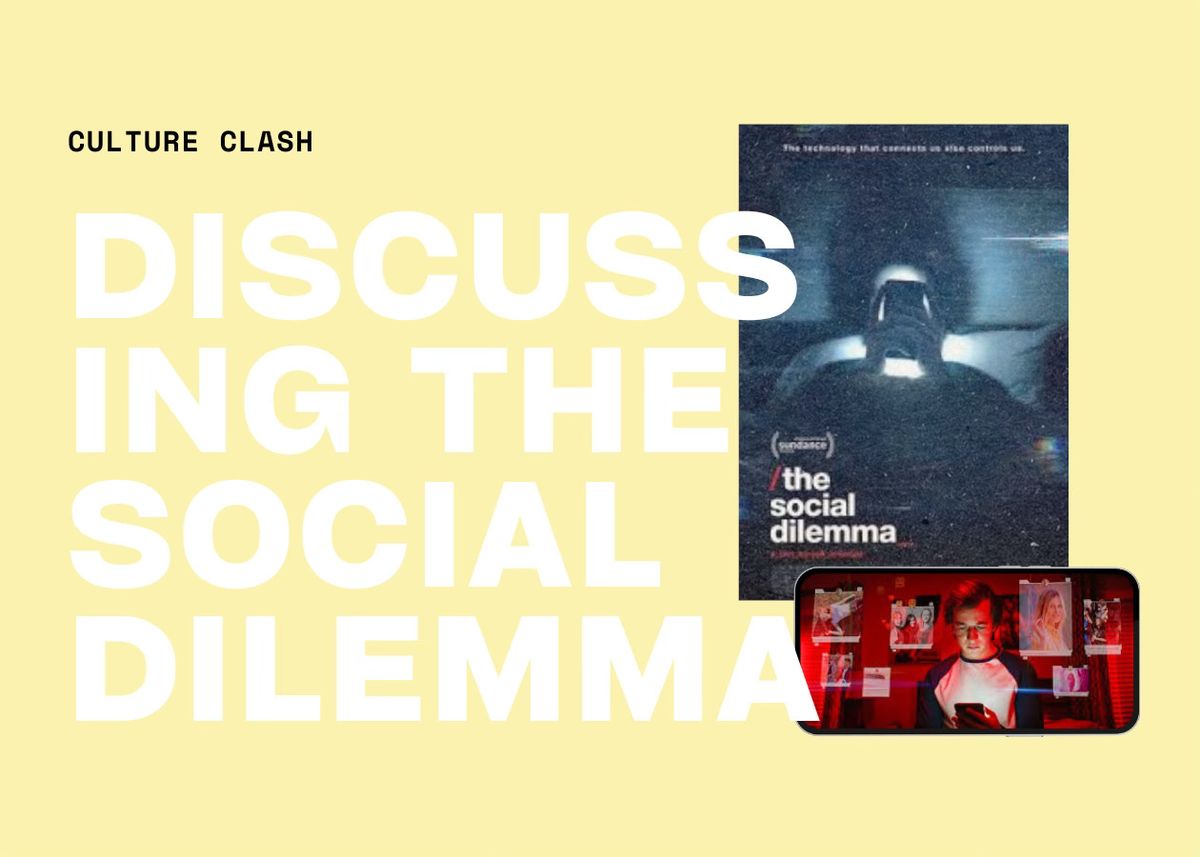
Anyways, the prompt for this discussion was to watch the film The Social Dilemma and to provide a response “to the content of the documentary in regards to its critique of mass media.” Being sure to use specific examples from the course text.
About the film
American Docudrama, released on Netflix in September 2020.
Directed by: Jeff Orlowski
Written by: Davis Coombe, Vickie Curtis, & Jeff Orlowski
The Response:
Mass media has always offered concern over its influence of dominant ideology, yet our current economic system and rapid social media innovation has empowered a new exploitative standard. Schiller critiques mass media for its ability to reach global audiences and foster conformity – a fate that has only now matured with engagement-based platforms and data-fed AI algorithms.
This is a belief, and to many a truth, held by me, Schiller, and many more. It is also the main content of The Social Dilemma film. After rewatching the film for this discussion, I was reminded of our complacency in this digital crisis. To be forthcoming, [I am very interested in this topic, both in my undergraduate research and with this Substack.]
So, I can’t say this film revealed anything new to me, but I agree with its overall message. Some themes I took away were:
Capitalism: Innovation for the sake of innovationAsking, can we? Instead of should we.Doing nothing is something.Beyond Demanding: Grassroots Action
I agree with the various experts and interviewees in the stylized documentary, with the idea that the current situation of social media and data mining is a result of a capitalistic buy-in, meaning that if the goal is infinite monetary growth, exploiting the attention economy at all costs is the perfect model. While daunting, identifying this root problem is a good first step. This idea runs into my second theme – which is never stopping to ask if we should do something, if it is right, and what the long-term consequences may be. I think it is funny that there is this idea that we couldn’t have known, this is some sort of surprise, and the film makes a good point as well, that yes, yes we could have. We know so much about people, and how we socially navigate the world, psychologically, biologically, through contemporary and historical means.
Where I disagree with the film is with the optimism some speakers shared for doing something. I did like how there was a lot of honesty from the ex-tech employees, that they too had this issue of addiction with the very systems they designed. I know I’m not perfect either, but it’s been 5-years since this film was released and 12 years since Snowden blew the whistle on the US national defense surveillance through telecommunications – both unique issues that underscore how unwilling or unable we feel to do anything about this privacy and really, mental-health and addiction issue. What was sold as a tool and a creative weird social sphere has morphed into a pay with your time and attention market – where the highest bidder, be that with money or power, pulls the strings. It’s dangerous when we frame the reliance we have grown to have on social networks for accessing information, for communicating, for working, for education, for recreation, or for creating, and it matters greatly.
Bringing it back in from my tangent, the last theme. The Social Dilemma sort of finishes with an optimistic call to action saying it is okay and encouraged to demand change, calling on the audience to care. Admirable no doubt, this is an issue, but it’s not changing at the top. The media companies that McChesney articulated, back in the 90s and 00s, to be monopolized private-sector conglomerates across media communication platforms, still exist. If anything, they have adapted and multiplied, not fallen. Not to be pessimistic but asking billionaires to stop wanting to make more money feels like a waste of time. Maybe it’s the nature of the film, distributed by Netflix, a media company with nearly half a trillion-dollar market capitalisation, but there are more tangible things we can do.
Think about how you consume media, your habits, and filter bubbles. If you really want to be on social media, engage with digital literacy training, or explore political bias news checkers. There are ways to have healthier relationships with the internet and its dark exploitative side, it just requires a bit of caution and self-integrity.
The Social Dilemma is a great film to get people thinking about this often-unspoken reality – using powerful and fast-paced imagery, speaking to a variety of experts and stakeholders, and using a fictional family to personalize the content, the film is engaging for a large audience.
That’s another post for Culture Clash, any ideas what I should write about next? Let me know.